


With the new year, I’ve been asked for more career tips than I usually do. Completely understandable, the 1st of January encourages a lot of us to pause and take stock of where we are in life. I am a big advocate of personal annual plans. I started 7 years ago, and going through them each year is a nice reminder of how much we change and how quickly we evolve.
I’m going to shamelessly plug Graham Weaver to make my point (he’s Managing Partner Alpine, Lecturer at Standford, and one of the figures that influenced my move from operator to investor). Annual planning documents are the check and adjust moments to make sure the compass is leading the boat towards the right direction.
I look back at my own career and there’s an easy narrative I can tell to make it make sense in hindsight. The truth can’t be any further from that. Every decision was filled with anxiety and uncertainty. At times designing for downside protection, other times swinging for the fences and playing for the upside, and most recently for optionality.
The purpose of this post is an attempt to share a glimpse into how I’ve made decisions about my own career that might help others. I have strong opinions here, but have no doubt they are loosely held and will evolve with time.
Back to the question(s) that I’ve gotten in many forms, “I feel stuck, what should I do next?”, “I’m not sure if I’m building the right startup, how should I decide?”, “What do you recommend I study at university?”, they are all difficult to answer. If we attempt to strip them down to their lowest common denominator, they are actually asking the same thing, how should I decide my next step relative to where I am today?
My Guiding Principles:
Deselection before selection
Selecting what to do is a privilege that we earn by knowing ourselves deeply. In behavioral science, the way our mind naturally works is we actually deselect when we make a decision for the first time. We walk by a supermarket shelf, we don’t think of a brand first (the first time), we deselect from the available options. If we’re buying Himalayan salt, we don’t think of a brand first, but we’re most likely to pick up a brand that we believe best aligns with what we’re looking for or we are familiar with. After deciding we reflect and post rationalize our “selection” but in reality it was us deselecting. The second time around, there could be muscle memory, and familiarity of picking up the same brand or product, but in reality how we got there the first time is by deselecting.
To summarize, before selecting, we should earn the right to select. We do this by trying enough things to develop an informed opinion.
Fall in love with the most impactful problem
We are problem solvers. We don’t create products for the sake of creating products. We create products that make people’s lives easier and give them more of what they value in a way that is better, faster, and costs less for them. Picking the right problem to solve is more important than the solution you build. Solving the most impactful problem (you decide the measure) is a arguably the biggest responsibility you have towards yourself. And once you figure it out, do it so well and for long enough to get noticed.
Jobs are just the same, instead of selling a product, we are renting our time with the promise that the value we create is higher than the cost of our time. However, solving problems on a ship that finds a treasure leads to a far different result than solving problems on a ship that’s on course to sink. If you’ll pick a job or rent your time, do so on the boat that is most likely to find the treasure.
Make yourself useful for long enough to get noticed
Compounding is one of the wonders of the world that we don’t talk about enough. Doing something for a few years and doing it well is good. You get a pat on your back. Doing something for a few decades and doing it well, you become an expert at it.
Naval talks about this concept of playing long term games with long term people. I can’t stress this enough. If you’ll become an expert at something, then select a category where similar people will be in the category for a long period of time, you end up with compounded expertise AND compounded trusting relationships, that increases your impact by an order of magnitude, and you can see it in play comparing relationships between stock day traders and then between long time horizon investors and capital allocators.
Tools to keep close:
The biggest mistake I’ve ever made was taking advice from the wrong people. Now I don’t believe in advice, I ask people I respect for their experiences and I take what I believe is relevant to me. That reflection makes their experience personal to my simulation. Below are three tools for reflection that I live by.
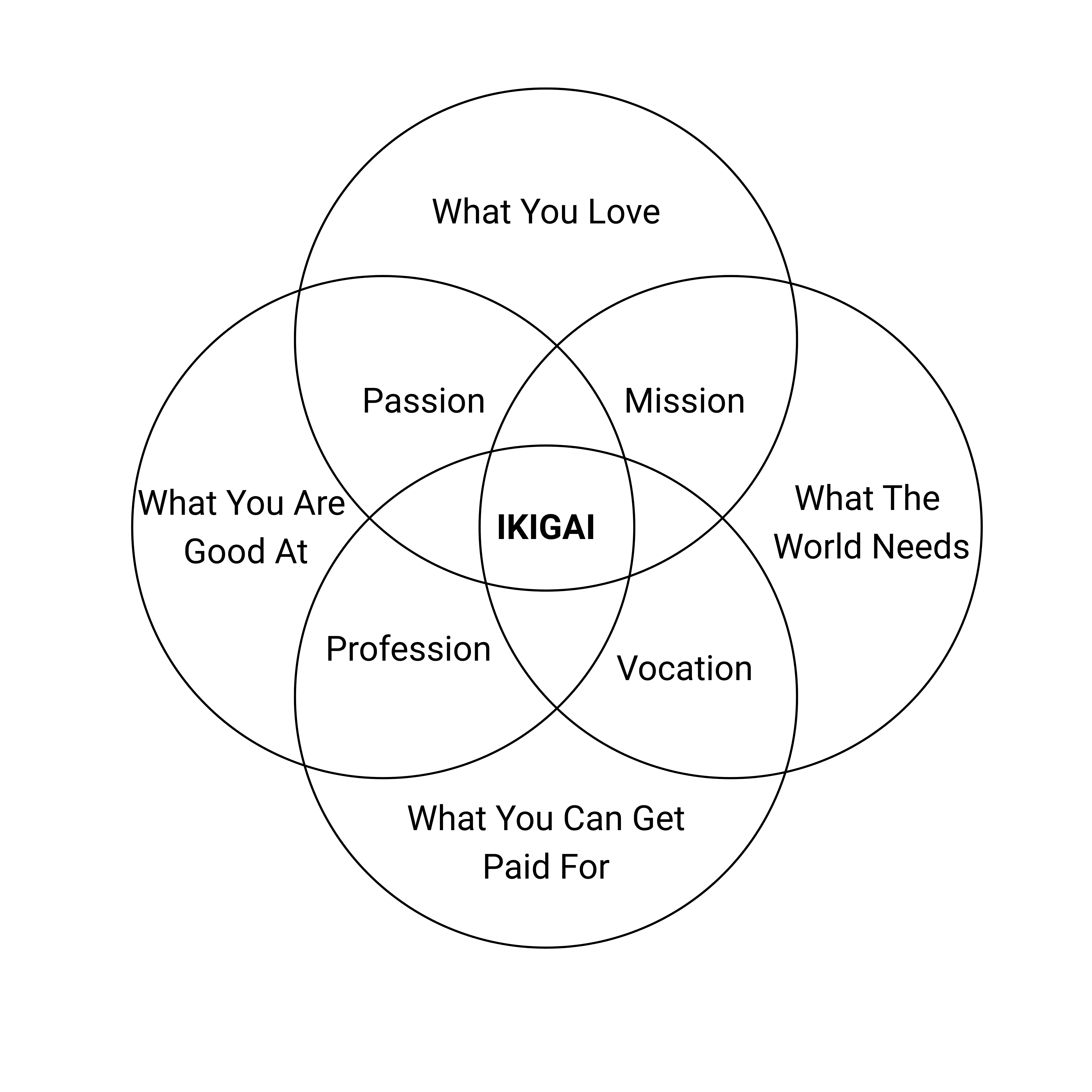
Ikigai
I’ve mentioned Ikigai before in Lessons From My Favorite Startup. It’s a powerful tool that works if you really invest the time in self reflection. It takes time but the investment pays back almost immediately.
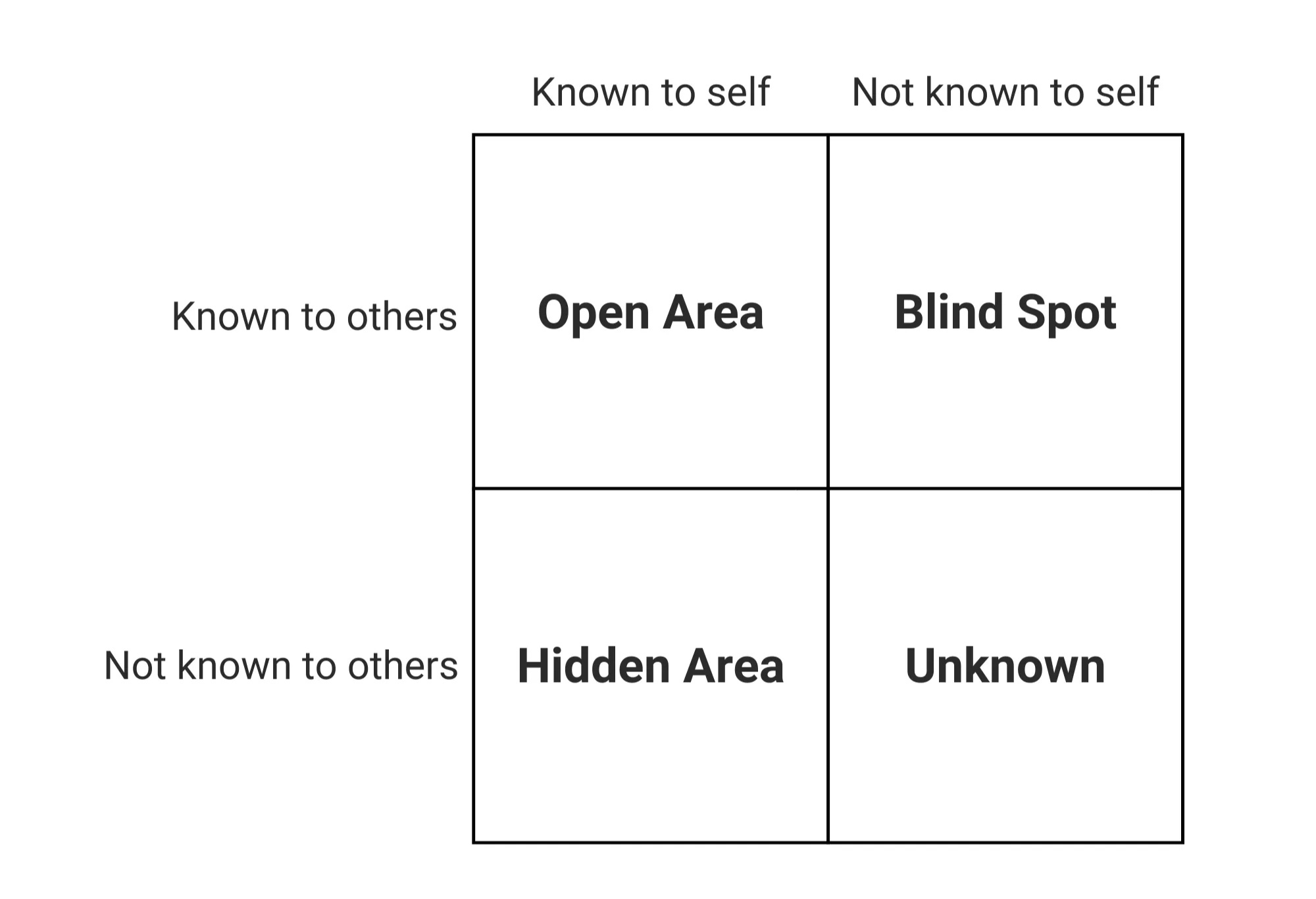
Johari Window (about the self), and the Rumsfeld Matrix (about the world)
As awkward as it feels, true self and outer reflection requires us to ask those who know us best to share their experiences dealing and working with us.
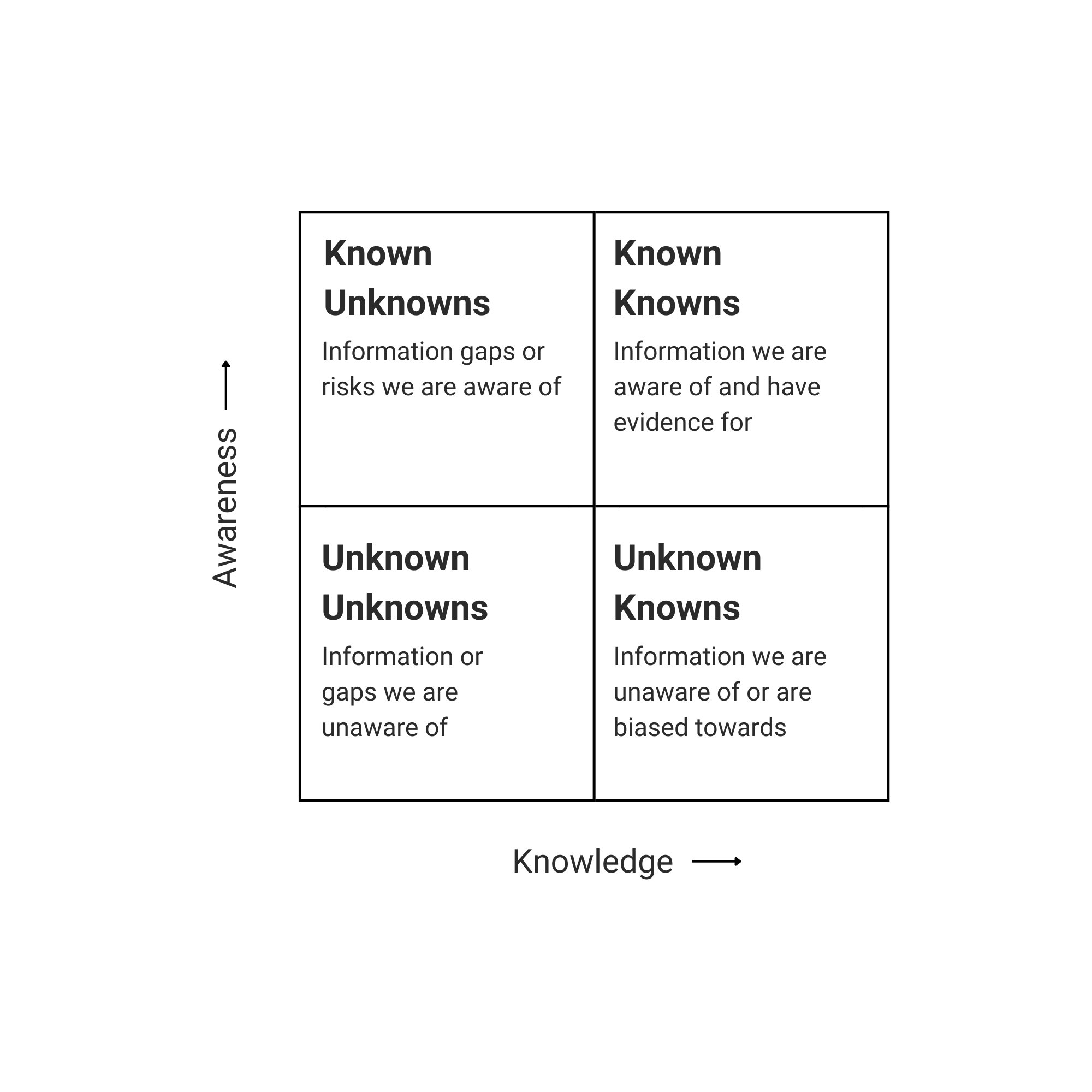
The most ignorant people think they know everything. I’ve been there before, and now I know that the more I know the less I actually know. Knowing where we sit at all times is a super power with making big decisions in an informed way. This next framework is popular in Epistemology and military risk analysis, Donald Rumsfeld popularized this and he was mocked by the media for it. Once understood, it’s a powerful tool.
In Summary
Careers rarely follow a clean, linear narrative. Most meaningful decisions are made amid uncertainty, balancing downside protection, upside potential, and optionality over time. Clarity comes less from choosing the “right” option and more from committing to meaningful problems, and staying useful long enough for compounding to take effect. If there’s one takeaway, it’s this: invest in understanding yourself, choose the ship before worrying about your role on it, and give time the chance to work in your favor.
Happy new year!
Just come across this article. A genuinely brilliant piece, I’ll be sharing it
Happy new year!
It honestly feels like the perfect article to start the year with a bit of reflection.
I really liked how simple and clear the language is, while the ideas are still very well connected. What you shared doesn’t just apply to careers or startups, but also to everyday decisions,, how we plan our days, think, and improve over time.
One point that really stood out to me was the idea of asking people about their experiences rather than their opinions. I love that approach because it gives you a real sense of how someone sees and navigates life, and sometimes you end up learning things you didn’t even know you needed.
At the beginning of every year, I usually try to reflect and sum up the past year into a couple of main lessons. So, using your approach, I’m curious ! from your experience going through 2025, what were the biggest lessons you learned, and why?