


The power of our inner voice knows no limits.
Marcus Aurelius once wrote, “Our life is what our thoughts make it.” The older I get, the more I realize how true that is. You can be the most accomplished person in the world with a continuously self-deprecating inner voice, or you can be a janitor with a positive inner voice. Between the two, the janitor lives a better life.
A previous version of myself would have argued that a critical inner voice is necessary for achievement. That without it, the urgency disappears. That maybe the “accomplished” person would not have been able to fight through gravity and accomplish without it. Unfortunately, I grew up with a very critical inner voice. I take full responsibility for it, and I don’t think others could have influenced it. That inner voice has been both fuel and poison. It pushes me to ask, what could I have done better? when things go well, and what did I do wrong here? when they don’t.
Stoicism has been a beautiful gift that has broadened my horizon and became a useful framework for navigating life, I recognize that my inner voice has been the most difficult thing I’ve tried to change so far. As a new father, it’s also the thing I think about most when raising a child. My steps are no longer my own, and attempting to design for my son to have a positive inner voice is important to me now.
Pain is part of life. Suffering is optional.
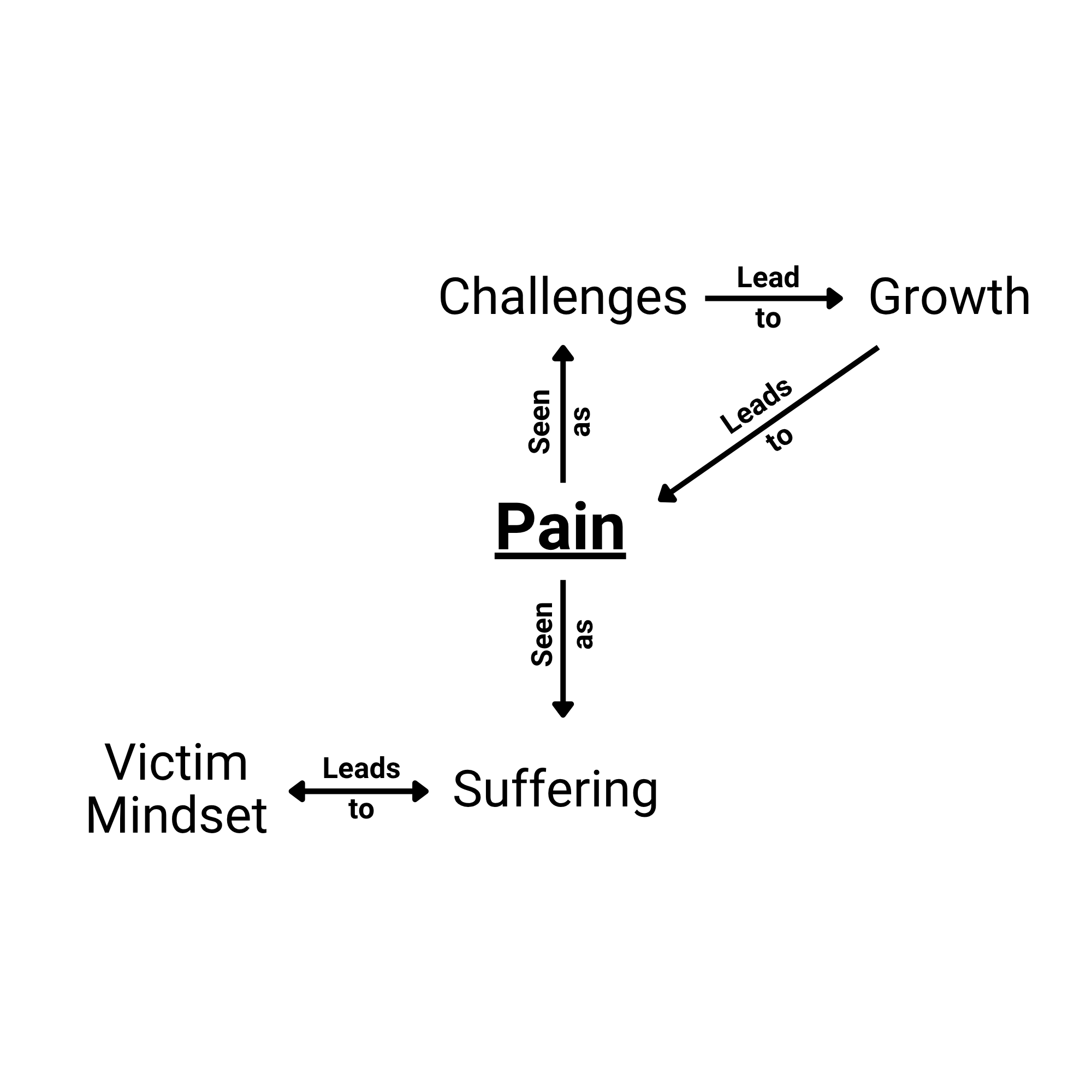
I’ve written before about how our thoughts become our feelings, our feelings drive our actions, and our actions ultimately shape who we become. They also shape our perception of ourselves, and therefore, the quality of our lives.

Anything worth doing comes with the risk of embarrassment. Yet socially, we are conditioned to avoid embarrassment at all costs. There’s a famous Arab proverb: “غلطة الشاطر عن الف” which roughly translates to “a smart person’s mistake equals a thousand mistakes.” The more successful or respected you become, the more society expects perfection from you.

I grew up believing this. It’s almost a form of the innovators dilemma. After spending the past seven years deeply entrenched in the startup and technology world, I’ve come to disagree with it completely. A “clever person” became clever by making mistakes. Yet once people become respected, the incentives around them completely reverse. We stop rewarding experimentation and start rewarding caution. We encourage people not to make mistakes instead of encouraging them to keep testing ideas, increasing the pace of experimentation, and following the scientific method.
This is an angry post. Not with the world, but with myself. Because while I believe I’m a first-principles thinker, I spent the first third of my life quietly allowing the outside world and my inner voice to shape my thoughts.
What I wanted to share today is this: our inner voice drives everything, and it is possible to influence it. Reading, learning, coaching, and self-reflection have all helped me slowly reshape mine.
It’s beyond important to discipline our thoughts. I’m still working on mine, and if you have any hacks or lessons that helped you improve your own inner voice, I’d genuinely love to hear them.
PS - if your OCD is kicking in with the maze, this is for you so you can go about your day.

Controlling your thoughts is hard.
Anything that could pass by might affect your thoughts, how you think and reshape the view you have on certain things in life.
A solution that helped me reshape my inner voice was actually not believing it when it was harsh, and believing it when it meant taking it easy on myself.
Thanks for the post
Enjoyed reading the blog Moayad.
It reminded me of this quote from Seneca in On the Shortness of Life:
“A man is as unhappy as he has convinced himself he is.”
A powerful reminder that our perception shapes much of our reality.